The Hidden Benefits of Little Residential Memory Care Communities
Business Name: Hearthstone South Weber
Address: 6980 S 475 E, South Weber, UT 84405
Phone: (385) 380-3382
Hearthstone South Weber
Our assisted living and memory care community sits in a quiet South Weber neighborhood at the mouth of Weber Canyon, minutes from Ogden Regional Medical Center and close to family across Davis and Weber counties. We offer Assisted Living private studio apartments for seniors who want independence with a helping hand: medications, bathing, dressing, meals, and housekeeping. We also provide Memory Care secure, calm setting with structured routines and 24/7 supervision for residents living with Alzheimer's disease or other dementia. We've cared for residents here since 2019, with attentive caregivers, home-cooked meals, and a calendar full of things to look forward to.
6980 S 475 E, South Weber, UT 84405
Business Hours
Families usually come to the concept of memory care during a season of pressure. A loved one with dementia is wandering at night, missing out on medications, or becoming unsafe in the kitchen. Everyone is exhausted, fretted, and unsure whether assisted living, memory care, respite care, or bringing in more home help is the ideal move.
What numerous households do not understand at first is that memory care is not one consistent design. There are big, resort-style senior care campuses with dozens of citizens on each floor. There are locked dementia care systems inside assisted living neighborhoods. Then there are little residential memory care homes, sometimes accredited as residential care facilities, board-and-care homes, or care homes, with 6 to 16 residents living together in a house-like setting.
Those smaller sized neighborhoods can look deceptively basic from the outside: a single-story home on a quiet street, a little sign, possibly a garden. Inside, nevertheless, the design of care can feel really various, and the benefits often only become clear once you have actually seen both big and small settings side by side.
This short article makes use of years of dealing with households, visiting numerous communities, and viewing locals over time. The goal is not to claim that little is constantly much better. It is to highlight the advantages that tend to be hidden till you understand what to search for, and to help you weigh them against the truths and trade-offs of each option.
What "little residential memory care" really means
Terminology in senior care can be confusing. On paper, a little residential memory care neighborhood may be accredited under the very same umbrella as assisted living, however its structure and day-to-day rhythm are distinct.
Instead of a big building with long corridors, elevators, and dining-room that seat 60 people, a small residential home usually has:
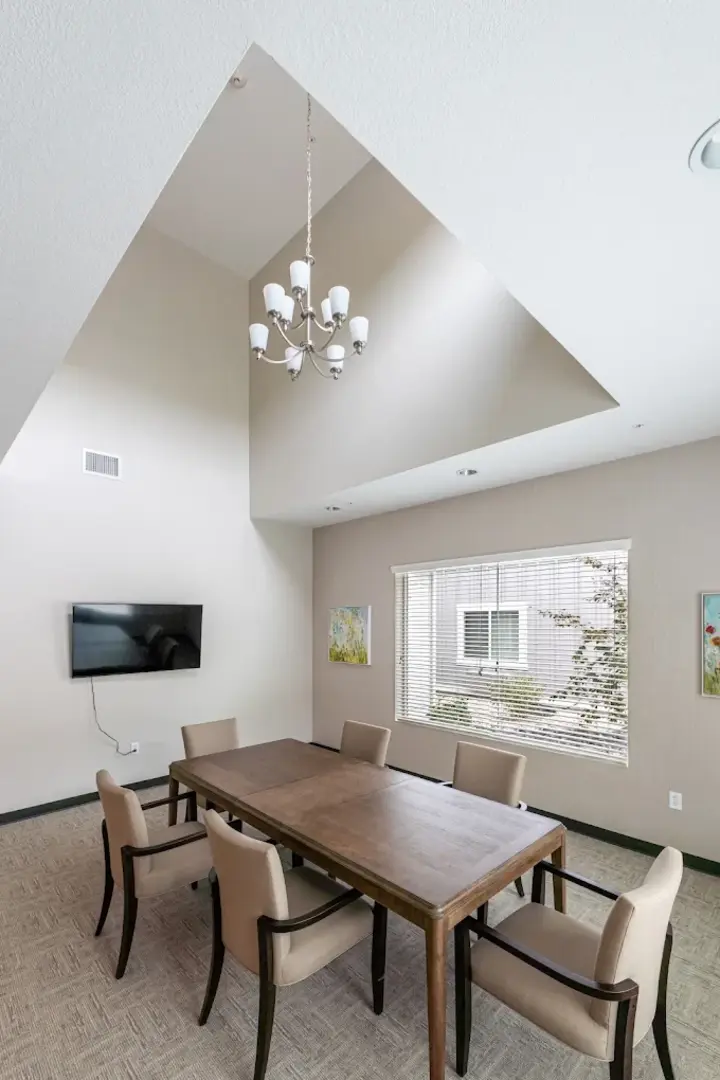
A single front door, often with a keypad for safety, that feels like getting in a personal home.
A living-room, dining location, and kitchen that look and function like a family, not an institution. Private or semi-private bedrooms, in some cases with residents encouraged to bring their own furniture. A little yard or outdoor patio that personnel can supervise easily.Staffing patterns reflect the smaller sized scale. Instead of a rotating cast of lots of caregivers, there might be a stable group of caregivers, a home manager, and visiting nurses or therapists. The caregivers cook, assist with bathing and dressing, cue medications, and lead easy activities. The lines between "care" and "life" blur, which can be an enormous benefit for people with dementia.
Small memory care homes can be stand-alone operations or part of a bigger senior care company. Some specialize solely in dementia care. Others serve senior citizens with mixed requirements, such as Parkinson's disease, stroke recovery, and basic frailty, while still supplying structured dementia care.
Understanding this setting helps explain why particular advantages emerge more quickly here than in larger, more formal assisted living buildings.
Emotional safety and the scale of the environment
One of the most undervalued stressors for a person living with dementia is large environmental complexity. High ceilings, long hallways, a consistent circulation of people, televisions shrieking, announcements over a speaker system, and big group activities can overwhelm somebody who already has a hard time to process sensory input.
In little residential memory care, the environment is typically quieter and slower. Homeowners move between a handful of familiar spaces. The kitchen smells like soup or coffee, not like an industrial food service operation. Personnel voices are much easier to acknowledge. Even the sightlines are easier: from a lot of seats you can see the front door, the cooking area, and the backyard.
For somebody with moderate dementia, that smaller phase typically reduces stress and anxiety. I have actually seen citizens who were pacing and "attempting to go home" in a large memory care system end up being calmer within a week of moving into a little residential home. They still have dementia. They still have moments of confusion. The difference is that the environment no longer bombards them with signals they can not sort.
Families in some cases worry that a smaller setting will feel claustrophobic. In practice, the opposite is generally true. Individuals with cognitive problems tend to feel more in control when they can see and comprehend their surroundings. Less doors, fewer choices, and fewer complete strangers can indicate more psychological safety.
Consistency of relationships
Large assisted living and memory care neighborhoods can do numerous things well, particularly when it comes to features, treatment offerings, or on-site medical services. However, they fight with one standard reality: the more personnel you need to cover a 100-bed structure, the more turnover and rotation you will have.
In small residential memory care, staffing ratios and consistency are two of the most effective concealed advantages.
Families see it initially in easy details. A caregiver in a 10-bed home knows that Mr. S likes his eggs over medium and will not touch oatmeal, that he needs a pointer to call his daughter after lunch on Wednesdays, which he ends up being agitated if the blinds are closed too early in the evening. These are not products in a care strategy binder, they become part of the day-to-day material of life.
Over time, this consistency ends up being restorative. Dementia care depends heavily on nonverbal interaction. People read intonation, facial expression, and touch. When team member recognize, citizens unwind more quickly during individual care, accept help more readily after a fall, and react much better to redirection when they are upset.
Families benefit too. In a small home, it is common to see the very same 3 or 4 caretakers over months or years. You discover their names, they learn your family characteristics, and trust develops. When you contact us to ask how the night went, the individual responding to generally understands since they existed. That connection is more difficult to accomplish in a big center where day, night, night, and weekend shifts may all have different teams.
This is not to state small homes never ever have turnover or staffing obstacles, especially in a tight labor market. However when the resident-to-caregiver ratio stays lower and the group is intentionally kept small, the relationships that form can be much deeper and more stable.
Subtle personalization that actually matters
Marketing materials for both large and small service providers often highlight "individualized care strategies." The expression is so typical that households tune it out. What distinguishes an excellent small residential memory care neighborhood is not that a care strategy exists, but how deeply it affects day-to-day life.
Consider meals. In a large memory care system, the kitchen prepares a menu for lots of residents. Unique diets are accommodated, but practical limits exist. In a little home, personnel typically cook in the family kitchen. They might observe that three citizens who matured on farms eat much better when breakfast appears like what they remember from childhood: bacon, eggs, toast, coffee. Or that a resident with sophisticated dementia will just consume fluids if they are served in the exact same red mug he recognizes.
Those adjustments are tiny, yet they make the distinction in between a resident slimming down and maintaining it, between chronic dehydration and stable health.
The same sort of nuance appears in day-to-day routines. Some people with dementia wake early and settle finest if they shower before breakfast. Others are groggy in the early morning and battle bathing till mid-afternoon. In a home with 8 or 12 locals, caretakers can generally flex schedules without tossing a whole building off rhythm. It is just simpler to state, "We will do Mrs. L's shower after her preferred television show, not before."
Personalization likewise shows up in what is not required. Locals who hate large-group bingo or sing-alongs frequently withdraw in bigger neighborhoods, where activity calendars skew towards events created for 20 people. In a small home, engagement can be quieter and more customized. Folding towels next to the caregiver who is doing laundry, slicing soft veggies with a safe knife, watering the garden, or "assisting" set the table can all be framed as significant involvement, not childish busywork.
When done well, this subtle tailoring honors the adult identity of the individual. That self-respect is easy to guarantee; it is much more difficult to deliver without the flexibility that a small setting provides.
Reduced hospitalizations and crises
Families seldom ask about hospitalization rates on trips, however they should. Repetitive medical facility stays can speed up cognitive decrease, interfere with sleep and mobility, and sap whatever reserves a frail senior still has.
Small residential memory care communities can not always supply on-site nursing 24/7, specifically in states where policies differentiate them from competent nursing centers. Yet many of them still handle to avoid preventable emergency room trips through attention and timing.
Caregivers who see the very same 8 to 12 homeowners every day develop a fine-grained sense of standard. They observe when Mr. T is strolling a bit slower, when Mrs. G's hunger drops for the second day in a row, or when a normally talkative resident becomes unusually quiet. In dementia care, those Hearthstone South Weber memory care subtle shifts typically signify early infection, dehydration, pain, or medication side effects.
Because lines of communication are much shorter, a caretaker can tell your home supervisor at breakfast, who calls the nurse practitioner, who squeezes in a same-day visit. A urinary system infection gets dealt with in your home, with oral antibiotics and increased fluids, rather of advancing to delirium, a fall, and a 2 a.m. ER visit.
This is not a guarantee. Severe occasions still take place. There are times when a healthcare facility visit is absolutely appropriate. However the mix of closer observation, quicker reaction, and reasonable risk tolerance often leads to less disruptive emergency situations compared to more institutional settings where little changes can be more difficult to spot.
The function of respite care in a small setting
Not every household is prepared to devote to long-term placement. Some are looking after a parent in your home, balancing work and caregiving, and merely need a break. Others are unsure how their loved one will tolerate a relocation, or they want to "evaluate" a community before signing a long-term agreement.
Respite care stays in small residential memory care homes can serve a number of purposes at once.
Caregivers in your home get a possibility to rest, take a partner on a long-postponed journey, or recuperate from their own medical treatments without the constant alertness that dementia care demands. Understanding that your loved one remains in a little home, not a huge structure, can reduce the regret many caregivers carry when they step away.
For the individual with dementia, a short stay provides a possibility to change slowly. Two weeks in a small home with the same faces, the very same kitchen area, and a foreseeable regular feels less like being "sent out away" and more like coping with extended family. If an irreversible relocation later ends up being needed, the environment is currently familiar.
From a practical viewpoint, respite remains enable families to evaluate the quality of a home beyond the refined tour. Does staff deal with homeowners with patience at 7 a.m. On a Monday, not simply throughout the scheduled visit? Does your house odor like real food cooking, or air freshener covering smells? Are citizens engaged, or do they spend the majority of the day in front of a television?
Many of the most pleased families I have worked with began their relationship with a small memory care home through a respite care stay that exposed those concealed strengths.
Safety without a jail feel
Wandering and exit seeking are amongst the top reasons households consider devoted memory care. Large buildings typically respond with layers of security: badge-locked units, coded doors, and alarms whenever somebody tries to leave not being watched. The security is real, however the experience can feel clinical.
Small residential memory care homes generally have fewer entry and exit points to manage. One protected front door, in some cases one side gate to a completely fenced backyard, and a number of internal doors that can be alarmed. Rather of requiring to keep an eye on 3 floors and several elevators, staff can keep visual and auditory awareness of a compact space.
This permits a safety posture that feels more like residing in a supervised home than in a locked ward. Locals who tend to roam can stroll laps between the living room and kitchen, or around the lawn, while personnel keep casual watch. Doors can remain closed however not looming, and security hardware can be low profile.
There are constantly compromises. In a very little home, if two homeowners need one-to-one attention at the very same time, the group might have to prioritize or contact backup, which is not always instantly available. That is why it is important to ask how the home manages homeowners with very high wandering or behavioral requirements, and what occurs if your loved one's threat profile changes.
Still, for lots of households, the combination of safety and homelike ambiance is one of the strongest arguments for a little residential model.
How small homes deal with medical complexity
A common fear is that little residential memory care can not handle intricate medical needs. The reality differs by state guidelines and by specific supplier, but some patterns are worth understanding.
Most little homes are created for "assisted living level" care, not the full medical strength of a skilled nursing facility. They handle persistent conditions such as diabetes, heart failure, and COPD, administer routine medications, coordinate home health services, and supply hands-on help with all activities of daily living.
The covert advantage is frequently in the coordination, not the raw medical horse power. When a resident needs physical treatment after a fall, the therapist pertains to the home and works one on one in familiar surroundings. When a hospice or palliative care supplier ends up being involved, their nurses see the resident in the very same bed room they sleep in every night, with caretakers close by who can reinforce the care plan.
Of course, there are limitations. Citizens on ventilators, those needing frequent IV medications, or those with extremely unstable medical conditions normally belong in higher-acuity settings. A great small memory care company will be candid about these limits rather than attempting to extend beyond them.
Families must likewise recognize that a smaller home does not necessarily imply weaker medical oversight. A few of the best operators utilize a dedicated nurse who visits each home regularly, monitors weight trends, skin integrity, and medication regimens, and trains caretakers in dementia-specific strategies. The scale of the home can in fact make this sort of proactive nursing more effective.
Social fabric and everyday life
Many large communities highlight their activity calendars: live music, getaways, physical fitness classes, spiritual services. These can be important, particularly for citizens who still delight in larger social settings. But the quieter daily social life in a little residential home frequently matches people with moderate to advanced dementia better.
Instead of events, think of rhythms. A typical day in a little memory care home might include:
- Morning coffee around the kitchen table while caregivers prep breakfast.
- Soft music or a favorite TV program, with one resident helping fold laundry and another pacing a bit, checked on gently.
- A basic group activity like chair workouts, a short devotional, or checking out old publications together.
- Lunch served family design at a single table, with caregivers taking a seat to help rather than standing behind food carts.
- Afternoon naps, private walks in the garden, call with household.
- Evening regimens, one resident at a time, with calm assistance to get ready for bed.
Because the same individuals share these regimens day after day, small bonds form. A resident with restricted language might constantly sit next to the very same neighbor at meals. Another may light up when a particular caregiver comes on shift. These are not orchestrated "programs," but they are no less effective for it.
Families often worry that their loved one will be "bored" in a cottage without a jam-packed activity schedule. In practice, many citizens feel less pressure to carry out and more flexibility to move at their own rate. For people whose brains are already working overtime to translate reality, that gentler social fabric can be a relief.
Who tends to prosper in a small residential memory care home
No single setting works for every person with dementia. In my experience, the little residential model is especially well suited to a few common profiles.
- People who become overwhelmed by noise and crowds, or who have a history of stress and anxiety, often cool down in a smaller sized, more foreseeable space.
- Individuals who matured in close-knit families or towns and are comforted by domestic routines like cooking, gardening, and familiar household tasks tend to engage more.
- Seniors who have actually had negative experiences in institutional environments, such as long health center stays, may accept care more readily when it seems like signing up with a family instead of going into a facility.
- People with moderate dementia who still walk independently, however who are at risk of wandering or falls in your home, succeed where staff can unobtrusively monitor them in a compact setting.
- Caregivers who remain deeply involved and visit often may find a little home gives them more meaningful ways to take part, from sharing meals to decorating a bedroom.
On the other hand, somebody who is extremely extroverted, who still takes pleasure in large-group video games, performances, or campus-style environments, might prefer a bigger memory care neighborhood with robust programming. Likewise, an individual with exceptionally complicated medical needs may require the greater level of on-site nursing discovered in a skilled nursing facility.
Matching personality, illness phase, household participation, and medical intricacy to the right environment is more important than any single feature.
Questions to ask when touring a little memory care home
When you visit a little residential neighborhood, the discussion matters as much as the decoration. A few targeted concerns can expose how the home truly operates.
- How many caregivers are on responsibility during the day, evening, and night, and what is the optimal number of locals when totally occupied?
- Can you walk me through a typical day for somebody at my loved one's stage of dementia, consisting of how you deal with personal care and activities?
- How do you manage residents who wander, become agitated, or refuse care, and at what point would you state this setting is no longer proper?
- Who collaborates healthcare, how frequently does a nurse visit, and how do you handle urgent changes in condition?
- What is your method to including families, both in visits and in care planning?
Pay attention not just to the answers, but to how staff respond. Do they speak concretely, sharing examples, or do they rely on unclear reassurances? Do caretakers on the flooring appear engaged with citizens, or are they clustered around a staffing station? Does the environment feel like a location you might think of investing a full afternoon, not just a 30-minute tour?
Balancing expense, place, and quality
Cost inevitably enters the conversation. Little residential memory care can be similar in cost to larger assisted living and memory care communities, more economical in some markets, and more expensive in others, especially where single-family homes are valuable.
Because these homes are smaller sized, they likewise exist in fewer numbers. Your perfect setting might be an hour's drive away, while a larger facility sits ten minutes from your home. Long-term, that distance affects how typically you realistically visit, how rapidly you can respond in an emergency, and how connected you feel to the care team.
When weighing these aspects, think about not just monthly fees but likewise hidden costs. A slightly lower rate at a big community that regularly sends out citizens to the healthcare facility, charges extra for lots of services, or experiences high turnover may not be a bargain in time. Alternatively, a higher sticker price at a little home that avoids hospitalizations, includes most services in the base rate, and keeps staff for years may show more sustainable mentally and financially.
Ask for a detailed breakdown of what is included, what activates greater levels of care and associated fees, and how frequently rates have actually increased in the previous 5 years. Transparency here is a useful proxy for how the organization runs in other domains.
Bringing all of it together for your family
Choosing a memory care setting is seldom about finding excellence. It has to do with discovering the best fit provided your loved one's requirements, your family's capability, and the options in your area.
Small residential memory care communities should have a severe appearance due to the fact that so many of their strengths are not immediately obvious in a pamphlet. Emotional security produced by scale, deep relationships between homeowners and caregivers, true day-to-day personalization, minimized crises, a homelike technique to security, and a calmer social material are all simpler to accomplish when the entire "community" fits under one roof.
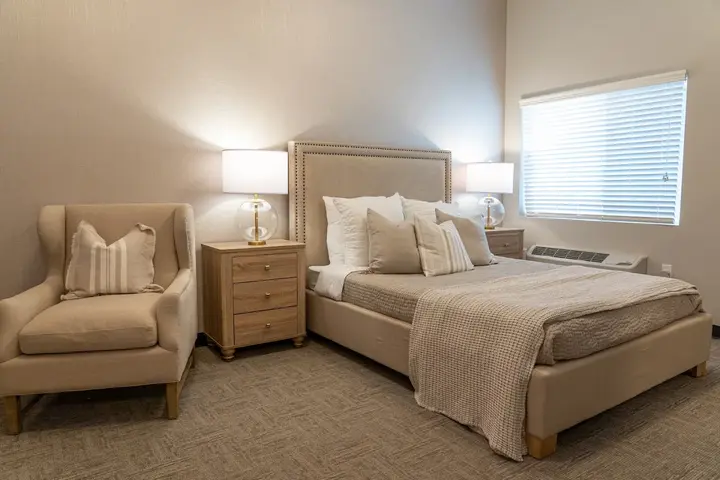
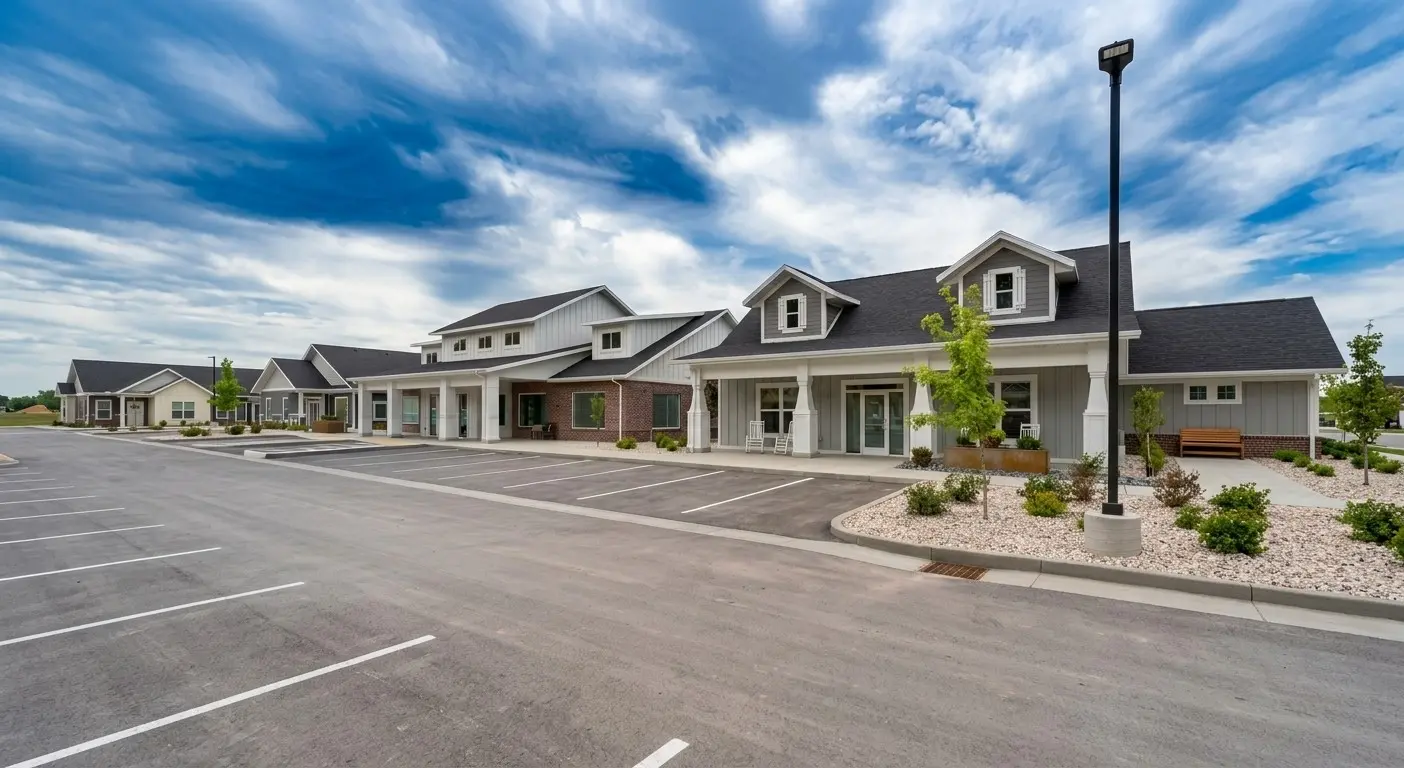
At the same time, little is not instantly better. Some homes are poorly run or under-resourced. Some can not manage really complicated habits or medical conditions. Some are just not situated where your family can realistically remain involved.
The most reputable way to reveal those concealed benefits is to see them in action. Tour more than one type of setting: a large memory care unit inside a senior living school, a standalone assisted living with a dementia care wing, and a minimum of one little residential home. Spend unhurried time there. Listen to your own body's response as much as your mind's analysis.
If you discover yourself breathing out when you enter a small house, seeing staff move calmly among a handful of residents who appear known and at ease, focus. That sense of relief is typically the very first sign that you have found one of those concealed advantages that can make the next chapter of your loved one's life much safer, gentler, and more human.
Hearthstone South Weber provides assisted living care
Hearthstone South Weber provides memory care services
Hearthstone South Weber provides respite care services
Hearthstone South Weber supports assistance with bathing and grooming
Hearthstone South Weber offers private bedrooms with private bathrooms
Hearthstone South Weber provides medication monitoring and documentation
Hearthstone South Weber serves dietitian-approved meals
Hearthstone South Weber provides housekeeping services
Hearthstone South Weber provides laundry services
Hearthstone South Weber offers community dining and social engagement activities
Hearthstone South Weber features life enrichment activities
Hearthstone South Weber supports personal care assistance during meals and daily routines
Hearthstone South Weber promotes frequent physical and mental exercise opportunities
Hearthstone South Weber provides a home-like residential environment
Hearthstone South Weber creates customized care plans as residents’ needs change
Hearthstone South Weber assesses individual resident care needs
Hearthstone South Weber accepts private pay and long-term care insurance
Hearthstone South Weber assists qualified veterans with Aid and Attendance benefits
Hearthstone South Weber encourages meaningful resident-to-staff relationships
Hearthstone South Weber delivers compassionate, attentive senior care focused on dignity and comfort
Hearthstone South Weber has a phone number of (385) 380-3382
Hearthstone South Weber has an address of 6980 S 475 E, South Weber, UT 84405
Hearthstone South Weber has a website https://hearthstonesouthweber.com/
Hearthstone South Weber has Google Maps listing https://maps.app.goo.gl/VWbP6MrpzTRbZkoG7
Hearthstone South Weber has an Facebook https://www.facebook.com/hearthstone.south.weber
Hearthstone South Weber won Top Assisted Living Homes 2025
Hearthstone South Weber earned Best Customer Service Award 2024
Hearthstone South Weber placed 1st for Senior Living Communities 2025
People Also Ask about Hearthstone South Weber
What assisted living care and senior care services does Hearthstone South Weber provide?
Hearthstone South Weber provides assisted living care designed to support individual resident care needs through personal care assistance, daily living support, life enrichment activities, and compassionate attentive senior care focused on dignity and comfort in a welcoming home-like residential environment
Does Hearthstone South Weber offer memory care services for seniors?
Hearthstone South Weber emphasizes compassionate senior care that supports residents with varying cognitive and personal care needs, with individualized assistance, meaningful life enrichment activities, and a comfortable home-like residential environment. Families should contact the community to confirm the availability of specialized memory care services
What respite care services are available at Hearthstone South Weber?
Hearthstone South Weber can help families explore respite care services that provide temporary senior care, personal care assistance, daily living support, and opportunities for life enrichment activities while prioritizing individual resident care needs, dignity, comfort, and peace of mind. Availability should be confirmed directly with the community
How does Hearthstone South Weber support daily living and life enrichment activities for seniors?
Hearthstone South Weber focuses on personal care assistance, individualized daily living support, and life enrichment activities that encourage social engagement, independence, and meaningful connections while providing compassionate attentive senior care in a comfortable home-like residential environment
Why do families choose Hearthstone South Weber for assisted living care and senior care?
Families considering Hearthstone South Weber can look for assisted living care that emphasizes individual resident care needs, personal care assistance, meaningful life enrichment activities, and compassionate attentive senior care focused on dignity and comfort, along with a welcoming home-like residential environment and opportunities to discuss memory care services and respite care services based on their loved one's needs
Where is Hearthstone South Weber located?
Hearthstone South Weber is conveniently located at 6980 S 475 E, South Weber, UT 84405. You can easily find directions on Google Maps or call at (385) 380-3382 Monday through Sunday Open 24 hours
How can I contact Hearthstone South Weber?
You can contact Hearthstone South Weber by phone at: (385) 380-3382, visit their website at https://hearthstonesouthweber.com/ or connect on social media via Facebook
Ramblin Roads Family Dining offers traditional American comfort food in a relaxed atmosphere where families supporting loved ones through assisted living, memory care, senior care, elderly care, and respite care can share meaningful meals.